
Foundations
What Your Body Actually Needs Postpartum (Not What Diet Culture Tells You)
Postpartum isn't a time to bounce back, optimize or restrict. It's a recovery period, and recovery runs on food.
- Postpartum is a recovery period, not a moment to diet, bounce back or optimize anything.
- The nutrients that keep coming up: iron, protein, calcium and magnesium, B vitamins, omega-3s, and a lot more water than you think.
- Warm and cooked over cold and raw, especially in the early weeks — every postpartum tradition lands somewhere near this.
- Eat regularly. Three meals and two or three snacks, nothing longer than three or four hours. One-handed at 2 a.m. counts.
- Recovery doesn't stop at day 40. The physical and emotional changes keep unfolding for months — often well past the six-week visit.

Let me get this out of the way: postpartum is not a time to diet.
It's not a time to "bounce back." It's not a time to optimize, restrict, or count anything other than the hours since you last ate — which should be few.
Your body just did something extraordinary. Whether you gave birth vaginally, had a cesarean, or are holding a baby who came to you another way, you're in a recovery period now. And recovery runs on food. Real, substantial, nourishing food.
What's actually going on in there
A little context, because I think it helps to understand why your body is asking for so much.
After birth, your uterus is shrinking from roughly two and a half pounds back down to two ounces. Your blood volume, which rose by about half during pregnancy, is rebalancing. Your hormones are shifting faster than at any other point in your adult life. Your muscles, your pelvic floor and your tissues are all healing. If you had a cesarean, you're also recovering from major abdominal surgery.
And if you're nursing, you're producing something in the range of 24 to 32 ounces of milk a day, which takes roughly 500 extra calories to make.
So this isn't a moment to eat less. It's a moment to eat well.
What your body keeps asking for
I'm not going to hand you a supplement list. What I want you to see is why the meals that show up in postpartum traditions all over the world tend to contain the same handful of things.
Iron
You lost blood during delivery — an average of about 500ml in a vaginal birth, often roughly double that in a cesarean. Iron is what your body uses to rebuild red blood cells.
Where to find it: red meat, liver, dark leafy greens, lentils, beans. Pair it with something acidic — lemon, citrus, peppers — which helps you absorb it.
Worth knowing: if you're exhausted well past what you expected, low iron can be part of the picture. That's a conversation for your provider, and a blood test answers it quickly.
Protein
Protein is what tissue repair and milk production are built from. General guidance lands around 60–70 grams a day if you're not nursing, and 70–100 if you are.
Where to find it: eggs, chicken, beef, fish, bone broth, legumes, dairy if you tolerate it.
What it looks like in practice: protein at every meal. A boiled egg with breakfast. Broth sipped between meals. Leftover chicken on a pile of greens.
Calcium and magnesium
Calcium matters for your bones, and it matters more when you're nursing. Magnesium is the one most of us are short on anyway, and it doesn't get easier on no sleep.
Calcium: dairy, bone broth, dark leafy greens, sardines. Magnesium: nuts, seeds, dark chocolate (yes), whole grains, leafy greens.
B vitamins
The energy ones. B12 comes only from animal products, so if you're vegetarian or vegan this is the one to plan for. Folate and B6 come along with a diet built on real food.
Where to find them: meat, fish, eggs, poultry, leafy greens, legumes.
Omega-3s
Where to find them: fatty fish — salmon, sardines, mackerel — plus grass-fed meat and eggs. Two or three servings of fish a week is a reasonable target.
Water
If you're nursing, you may find yourself suddenly, urgently thirsty the moment the baby latches. That's worth listening to.
Roughly: 8–10 cups a day if you're not nursing, 12–16 if you are. Warm liquids — broth, herbal tea — are what most traditions lean on, and they tend to be easier to get down when you're wrung out.
Why "warming foods" keep coming up
If you've read anything at all about postpartum food, you've run into the idea of warming foods.
It isn't only about temperature. In Ayurveda, in Chinese medicine, in more traditions than I can list, postpartum is understood as a time when the body wants warmth: warm spices, warm broths, warm grains, cooked vegetables.
And practically speaking, warm cooked food is simply easier to eat than a bowl of raw vegetables when you're this tired.
There's wisdom in reaching for a bowl of warm soup over a cold salad in the early weeks. You don't have to follow it perfectly.
Think ginger, turmeric, cinnamon, cumin, fennel. They make the food taste like something, and they make it comforting, which is not a small consideration.
What to go easy on
I'm not here to tell you what you can't eat. A few things are worth being mindful about, though.
Ultra-processed food. Not forbidden. Just a thin foundation to build on when your body is doing this much work. Treats included, when you want them.
Too much caffeine. A cup or two is fine. More than that starts eating into sleep you're already short on, and it does pass into breast milk.
Alcohol. If you're nursing, the general guidance is to wait two to three hours per drink. But honestly? It tends to make exhaustion worse. Give yourself permission to skip it for now.
Eat regularly, however you can
Here's the simple thing that gets lost: eat regularly.
When you go too long without food, your blood sugar drops, your mood follows and your energy disappears. Postpartum is hard enough without adding hunger to it.
Aim for three meals and two or three snacks. Eat within an hour of waking. Try not to go more than three or four hours without something.
And if you're eating one-handed while nursing at 2 a.m.? That counts. Getting food into your body, however it happens, is the whole goal.
The actual point
I could give you a longer list. I could talk about micronutrients and optimal ratios and lab values. But that isn't really what you need right now.
What you need is permission. Permission to eat. Permission to eat well. Permission to prioritize your own nourishment, even when — especially when — you're busy caring for someone else.
Traditional postpartum care understood this. In cultures around the world, new mothers are fed by the people around them. Warm meals, nourishing broths, food that restores instead of depleting.
We've lost a good deal of that. But you can bring it back in small ways. A freezer with meals already in it. A partner who reminds you to eat. A friend who drops off broth without asking first.
This doesn't end at day 40
The first forty days are the most intensive stretch, and your body is doing heavy work in them.
But recovery keeps unfolding for months after that — some would say a year or more. Your need for real food doesn't evaporate when the newborn phase does.
Be patient with yourself. Keep eating. If you want more on why this window matters and why support shouldn't stop after a fortnight, have a look at The First 40 Days — and Beyond.
The bottom line
Postpartum nutrition isn't about restriction or optimization. It's about giving your body what it needs while it heals, while it makes milk if that's your path, while it weathers a level of sleep deprivation most people never experience.
Iron. Protein. Calcium. B vitamins. Omega-3s. Water. Warm, satisfying, ready-to-eat food.
That's what your body is asking for. And you deserve to receive it.
"Tell me what you eat, and I will tell you who you are."
— Jean Anthelme Brillat-Savarin (borrowed here because a mother who eats well is caring for herself, too)
Topics
Share this to your Story
We'll make you an image that's already sized for it.
From the kitchen
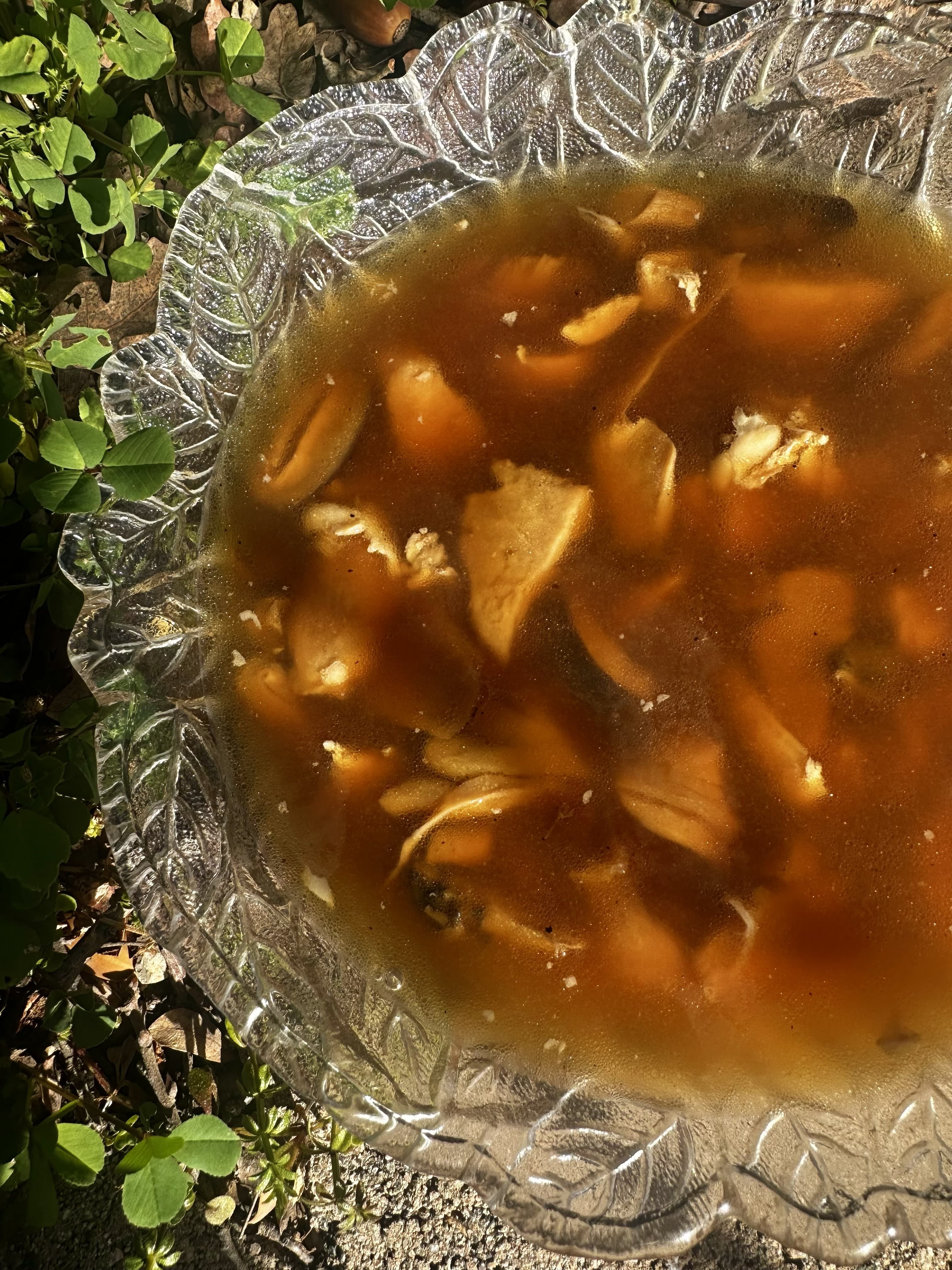
Warming Chicken Soup
This chicken soup is designed to be familiar yet new-- not quite your grandma's chicken soup, but still a chicken soup for the postpartum soul. Like any good chicken soup, it's built in layers: dashi made with kombu and local, organic dried mushrooms, our 48-hour bone broth, fresh ginger and organic white miso for depth and beneficial probiotics.
Feeding someone who just had a baby?
We cook the meals and ship them frozen, so there is one less thing to figure out.