
Foundations
The Science of Bone Broth (And Why It's a Postpartum Staple)
Cooks got to bone broth centuries before the researchers did. Here's what a long simmer actually produces, what the evidence supports, and what it doesn't.
- A long simmer — 24 to 48 hours — breaks bone collagen down into gelatin. If it jiggles when cold, you did it right.
- Postpartum traditions on every continent include a slow-simmered broth. The cooks got there long before the researchers.
- What's well established: glycine and sleep, collagen-derived amino acids in connective tissue, bioavailable minerals, glutamine and the gut barrier.
- What isn't: there are no large clinical trials on bone broth in postpartum, and no proof it beats other protein sources.
- Most supermarket "bone broth" is seasoned stock with collagen powder added. Cooking time and the gel test are how you tell.
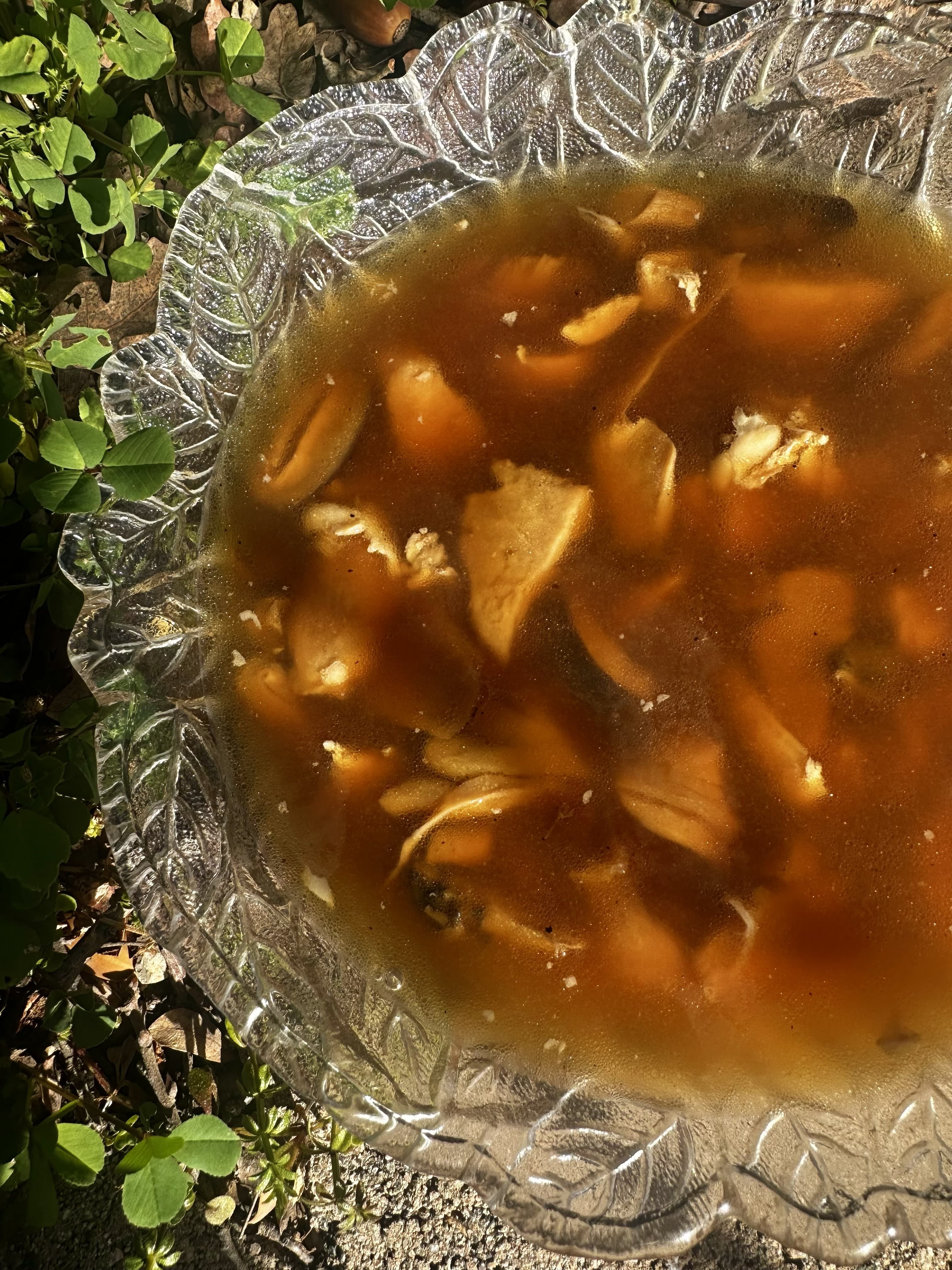
I'll be honest: when I first started reading about bone broth, I thought it was a trend. Another wellness fad on its way out, like activated charcoal or celery juice.
Then I actually looked at the research. And then I made some.
And then I understood why virtually every traditional postpartum culture — across continents and centuries — includes some form of slow-simmered broth. The cooks got there first. The research just explains why they were right.
What happens when you simmer bones for two days
When you cook bones low and slow, something genuinely interesting happens. The collagen in the bones and connective tissue breaks down into gelatin. That gelatin is what makes good broth wobble like jelly when it's cold, and it's mostly made of a few specific amino acids: glycine, proline and glutamine.
These aren't exotic compounds. They're ordinary building blocks your body uses for repair — and postpartum is a stretch of intensive repair.
Why it turns up in postpartum specifically
Look at what a postpartum body is doing. It's repairing tissue, whether the birth was vaginal or cesarean. It's rebuilding blood volume after real blood loss. It's running on broken sleep. And in a lot of cases it's producing milk on top of all that.
Broth answers several of those at once, in the easiest possible form: warm, salty, hydrating, mineral-rich, and requiring nothing of you but a mug.
Which is why it shows up everywhere. Chinese zuo yuezi, often pork-bone based. Mexican la cuarentena, with chicken soup and specific herbs. Korean sanhujori, with seaweed soup over a beef-bone base. Different cultures, same instinct: give the new mother concentrated nourishment in a form she can actually get down. There's more on that pattern in the first forty days across cultures.
The warming part matters too
In Ayurveda, in Traditional Chinese Medicine and in plenty of other frameworks, postpartum is treated as a depleted, "cold" state that calls for warmth.
You can explain the same thing from a Western angle if you prefer: warm liquids are easy to get down, they're comforting, and they don't ask much of a digestive system that's under stress.
Either way the practical wisdom holds. A hot mug of broth feels restorative in a way that a cold plate doesn't, especially when you're wrecked.
Broth versus stock
Not all of it is the same thing. Three tells:
Cooking time. Stock simmers two to four hours. Bone broth goes 24 to 48, and that long extraction is the entire point.
The bones. Good broth uses the parts thick with connective tissue — joints, knuckles, feet, necks. That's where the collagen lives.
The gel test. Cold bone broth should jiggle. If it stays liquid, you didn't pull enough gelatin out of it.
A lot of what's sold as bone broth is seasoned stock with collagen powder stirred in. Read the ingredient list; it should be short.
What the research actually says
I want to be careful here, because bone broth gets wildly overclaimed in wellness spaces.
What's reasonably well established:
Glycine has been studied for sleep quality, with positive effects.
Collagen-derived amino acids are used by the body in connective tissue synthesis.
Broth provides minerals — calcium, magnesium, phosphorus — in a bioavailable form.
Glutamine supports gut barrier function, particularly under stress.
What we don't have:
Large clinical trials on bone broth consumption in postpartum specifically.
Any proof that drinking broth beats other good protein sources.
The reasonable conclusion: bone broth is concentrated, easily digestible, genuinely nourishing food with a sensible basis behind it. It isn't a cure for anything.
How to actually use it
You don't need to drink it by the gallon.
Sip it warm — a mug in the morning or the evening is grounding and hydrating.
Use it as a base. Cook grains in it instead of water. Build soups and stews on it.
Swap it in anywhere you'd use stock or water — rice, sauces, braised vegetables.
Keep it where you'll reach for it. Broth in the freezer gets used; broth you have to make doesn't.
If you want to make it
Two to three pounds of bones — beef, chicken, pork or a mix. Two tablespoons of apple cider vinegar. Water to cover by a couple of inches. Optional aromatics: onion, celery, garlic, bay.
Bring it to a boil, drop it to the barest simmer, and leave it for 24 to 48 hours. Strain, cool, and check whether it jiggles.
A few things that help: roast the bones first for flavor, skim the foam in the first hour, add the aromatics near the end so they don't turn bitter, and leave headspace in the jars if you're freezing it.
If you don't want to make it
Fair enough. Postpartum is not the moment to take up a 48-hour cooking project.
Buy it locally — plenty of farmers markets and butchers sell real broth. Or look for brands that state their cooking time and list actual bones. Or let it come built into meals that are already made, which is what we do: every Mothership soup and stew starts with broth that's simmered for 48 hours.
The goal is access to nourishment, not culinary achievement.
What it won't do
Bone broth is not going to cure postpartum depression, heal you overnight, replace sleep, or stand in for medical care you need.
What it will do is give your body materials it can use, in a warm and easy form, while you're doing the actual work of recovering. And there's something to the warm mug itself that I won't try to justify with a citation.
It's one piece of a larger picture. It's a good piece.
The bigger pattern
Here's the part I find remarkable. Across cultures, long before anyone had heard of an amino acid, people worked out that simmering bones for a long time produced something restorative — and they gave it to the sick, the elderly and new mothers.
Now we have some science to explain why. But the wisdom came first, and that's true of most traditional postpartum food: the warming spices, the soft preparations, the emphasis on nourishing rather than restricting.
"Good broth resurrects the dead."
— South American proverb
Topics
Share this to your Story
We'll make you an image that's already sized for it.
From the kitchen
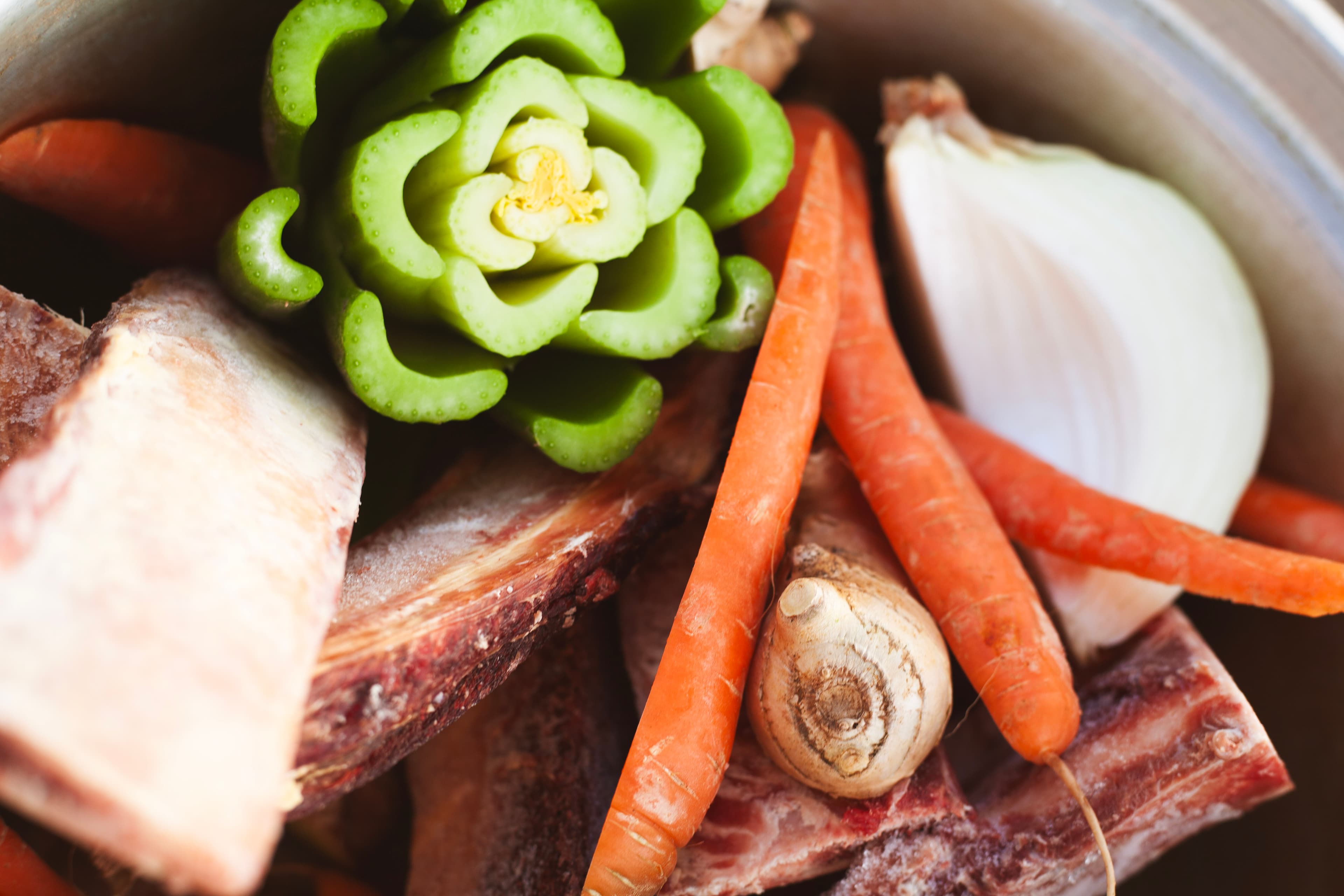
48-Hour Bone Broth
Organic, grass-fed beef bones plus organic carrots, celery, onions, garlic, and fresh rosemary = pure postpartum magic. A splash of organic apple cider vinegar before the 48-hour simmer allows for maximum mineral extraction, making calcium, magnesium, and phosphorus available in a form your body can actually absorb when you're depleted.
Feeding someone who just had a baby?
We cook the meals and ship them frozen, so there is one less thing to figure out.