
Nourishment
Postpartum Food Is Just Good Food
Nutrient-dense broths, slow-braised meats, warming spices and food that is equal parts digestible and delicious can nourish far more than the weeks after birth.
- Postpartum food traditions across cultures run on four principles: cook slowly, use good ingredients, make the meal warming and satisfying, and remove as much work as possible from the person who needs to eat it.
- That last principle is the one we underrate. A meal you can heat with one hand and eat from a mug is often the difference between eating and not eating.
- Those principles aren't only for new mothers. Caregivers, people home from the hospital, older adults, households in upheaval and anyone who simply likes good food can use a meal that's already been thought through.
- "Nutritious" is only useful if someone can actually eat it. A nutrition label is not the full story.
- Broadening who eats this food doesn't make postpartum an afterthought. It's what postpartum care has to teach the rest of us.
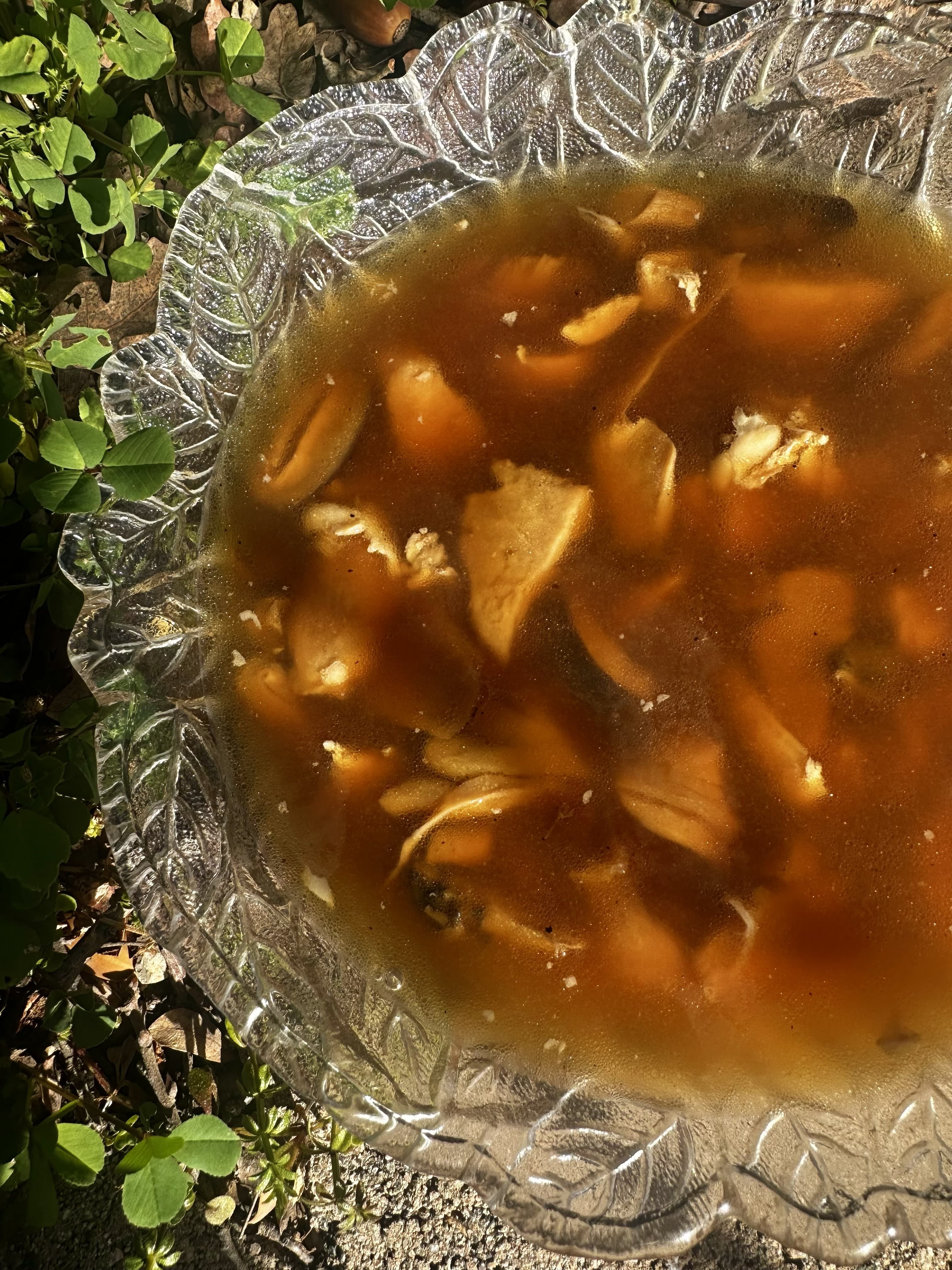
I developed Mothership for mothers after birth. That is still the core of my work, and it always will be.
However, somewhere between the forty-eighth hour of a bone broth and the hundredth container of warming chicken soup, something struck me… postpartum food is just good food. Isn't it?
Of course, not everyone has the same nutritional needs as a new mother. Far from it. Postpartum is a distinct physical, emotional, mental and spiritual passage; and the food traditions built around it deserve to be understood on their own terms.
What I mean when I say that postpartum food is just good food is that the principles underlying those ancient traditions are surprisingly relevant for a lot of us:
Cook slowly.
Use good ingredients.
Make the meal warming, satisfying.
Remove as much work as possible from the person who is in need of that deep, healing nourishment.
That last part matters more than we tend to admit.
After all, what is nourishment, really? A bowl of soup may be nourishing because of what's in it. It may also be nourishing because you can heat it up with one hand, eat it from a mug and wash exactly one spoon afterward.
We all go through seasons of life when this is not just what we need, but it's all we can handle. And therein lies the nourishment: without the ease of preparation — without the immediate availability — there would be no nourishment at all, because it's what goes first when life is too much. It's the difference between eating something substantial and standing in front of the refrigerator, tired beyond reason, hoping dinner will somehow assemble itself and then reaching for a block of cheese and a box of crackers and calling it a day.
Where this food comes from
Across cultures, postpartum meals tend to share certain logical threads. They are warm, soft, cooked (as in few-to-no raw ingredients), aromatically spiced and prepared by someone else.
Broths simmer. Grains soften. Meat cooks until it falls from the bone. Ginger, turmeric, garlic and other fragrant ingredients make their way into the pot. How these ingredients are layered, the protein of choice, and the balance of spices differ, of course; but the meal is generally made with all the work done upfront so the recipient's only responsibility is to receive it.
When we take a deeper look at "the first forty days" across cultures — the sacred time after birth when focus and care is on the mother, her healing process and giving her as much time as possible with her new child — we can see where these postpartum traditions come from and why protected time after birth is so sacred to begin with.
But in the U.S., and many modern western cultures, the time after birth is neither sacred nor protected for the person who did the actual birthing.
Bounce back culture — the pressure to get back to the way things were, "get your body back," go back to work and yet still somehow spend enough time with the baby, go out and do things and join mom groups and make play dates — still takes precedence over this idea of giving a new mother "the first forty days." Even with more and more advocates like doulas, midwives and other birthing professionals calling out bounce back culture as counterproductive, identifying postpartum as a time to heal, to take up space, to give yourself grace… the pressure often comes from within.
What happened in my own first two weeks
I felt it myself in my own postpartum experience.
My birthing experience was as crunchy as they come. I had a midwife to whom I felt deeply connected and gave birth at home, in my bed, with only my partner, midwife and her two assistants present.
In my birth plan, I wrote that I specifically wanted to take the first two weeks to focus on staying in bed with the baby. Sure, I wanted to go out in our backyard, get sunshine, take short walks and spend time in other rooms of the house. But my intention was not to welcome visitors yet and let the first two weeks be about my healing and being with the baby.
I felt very strongly about this. I didn't want to cook. I didn't want to clean. It was two weeks — 14 days. It's not so crazy, right?
Lo and behold, just three days after I gave birth, I found myself making a frittata in the kitchen for a family brunch. My partner's aunt, who I had met only once before, then came into the bedroom to visit with the baby while I breastfed.
Mother's Day just so happened to fall on the Sunday after I gave birth. I didn't plan the brunch. I didn't agree to go visit with anyone. I certainly wasn't prepared for anyone to watch me breastfeeding, a brand-new skill I had far from mastered. But these things happen. They happened to me, and I felt like my boundaries were strong. So imagine what can happen to someone who has no birth plan, who has wobbly boundaries, who has no idea that postpartum can be a magical time to focus on healing and sacred time with the new soul who has emerged earthside from your portal, rather than about everyone else who wants to meet the baby and ask how you're doing without really wanting to hear the answer.
Here's what I'm getting at:
There's a lot we can learn from the ancient eastern cultures who honor "the first forty days." And even if we can't adopt all of it in practice, we can look at the way these cultures nourish new moms and apply the same principles to how we feed ourselves.
For example:
Someone coming home after a long hospital stay may not want a raw kale salad, however impressively green it is.
A person caring for an ill partner may be perfectly capable of cooking and completely unable to face one more task.
An older neighbor may want real food in the freezer without buying six onions and committing the afternoon to chopping them.
A friend in grief may discover at four o'clock that coffee has been lunch.
None of these people is postpartum. All of them can benefit from a meal that's already been thought through.
"Nutritious" is only useful if someone can eat it
We have a peculiar habit of talking about food as a collection of parts. Protein. Fiber. Fat. Vitamins. Minerals. All worth paying attention to, sure. But a nutrition label is not the full story.
Tired parents, worried daughters, busy nurses, hungry teenagers, people with a deadline tomorrow and no clean pans in the house… all of these people need dinner. But not all of them are going to prioritize it 100% of the time.
This is one reason I love braises, soups, curries, broths and frittatas. They keep well. They reheat nicely. They are forgiving, regardless of whether they are thrown in the oven, on the stove, in the microwave or in your mouth straight from the fridge. They can contain protein, vegetables, grains, herbs and fats in a form that feels like real nourishment rather than a soulless TV dinner or protein bar. Not to mention they're actually delicious.
Of course, food has its limits. So do cooks. Sometimes toast is dinner, and toast is doing an excellent job. One nourishing meal is not going to fix what's wrong in a person's life.
But when we have the chance to make nourishment easier, I think we should take it.
So who else is this kind of food for?
The honest answer is: anyone who wants it.
There are, however, a few people I think about often.
The caregiver. The person organizing appointments, answering family texts and remembering which medication is taken with food is very often the person who forgets to eat. A freezer containing several nourishing meals is one less system for that person to run.
The person returning home. After travel, illness, surgery or an exhausting stretch of work, even a familiar kitchen can feel oddly demanding. Instead of coming home to even more work, dinner can simply be soft, warm and ready.
The older adult. Cooking for one can require nearly the same shopping and cleanup as cooking for four. Food portioned into manageable servings offers variety without asking someone to live off of leftovers for a week.
The athlete or very active person. A demanding day creates an extremely ordinary problem: hunger arrives before enthusiasm for cooking. A substantial meal waiting in the freezer solves that problem beautifully.
The household in upheaval. A move, a death, a new job, a divorce, wildfire evacuation, finals week—life has many ways of removing the hour in which dinner was supposed to happen. We wrote more about this in Nourishment During Life Disruption, because postpartum is not the only time a person's need for care rises as their capacity to arrange for it falls.
The person who simply likes good food. This category needs no defense. You are allowed to eat chicken soup because it tastes fantastic. You are allowed to keep sourdough in the freezer because warm bread makes Tuesday better. Not every bowl of good curry requires a life event.
The part that cannot be listed on the package
The food itself is only part of what postpartum traditions get right. The other part is that someone notices.
A new mother is not expected to research twelve recipes, compare grocery prices and coordinate a cooking schedule. Ideally, other people look at the situation and begin feeding her. The meal carries an ingredient we cannot put on a label: relief from having to decide.
When someone is having a hard time, we often say, "Let me know what you need." I have said it. You have probably said it. It's kind, but it hands the work of noticing, choosing and asking back to the person with the least room for it.
"I made you soup. Is Tuesday or Wednesday better?" is easier to receive.
So is, "There are three meals in your freezer. The heating instructions are on the counter."
Specific care is a lovely thing.
A larger table, not a different mission
At the end of the day, broadening the audience for what is widely considered to be "postpartum foods" does not make postpartum an afterthought. Quite the opposite, in fact.
These foods entered my kitchen and became part of my wheelhouse because generations of women understood that birth deserves a period of deliberate replenishment. Mothership exists because American mothers are still too often expected to move through that period with remarkably little practical support.
The lesson here is that postpartum care has something to teach the rest of us.
Make food that keeps well. Make enough for tomorrow. Use ingredients that have a reason to be there. Bring it before someone has to ask. Sit down and eat it while it is warm.
If you are feeding a new mother, wonderful. Feed her first, and feed her often. If you are feeding your father after a difficult week, your friend after a loss, your partner after a double shift or yourself on an ordinary Wednesday, I am so thrilled that this food found you, too.
You don't have to earn a nourishing meal by reaching a breaking point. You can simply be hungry.
Cheers to you, and to whatever is warming on the stove. (Or the oven — I just put some sourdough in right now.)
— Monika
Topics
Share this to your Story
We'll make you an image that's already sized for it.
From the kitchen
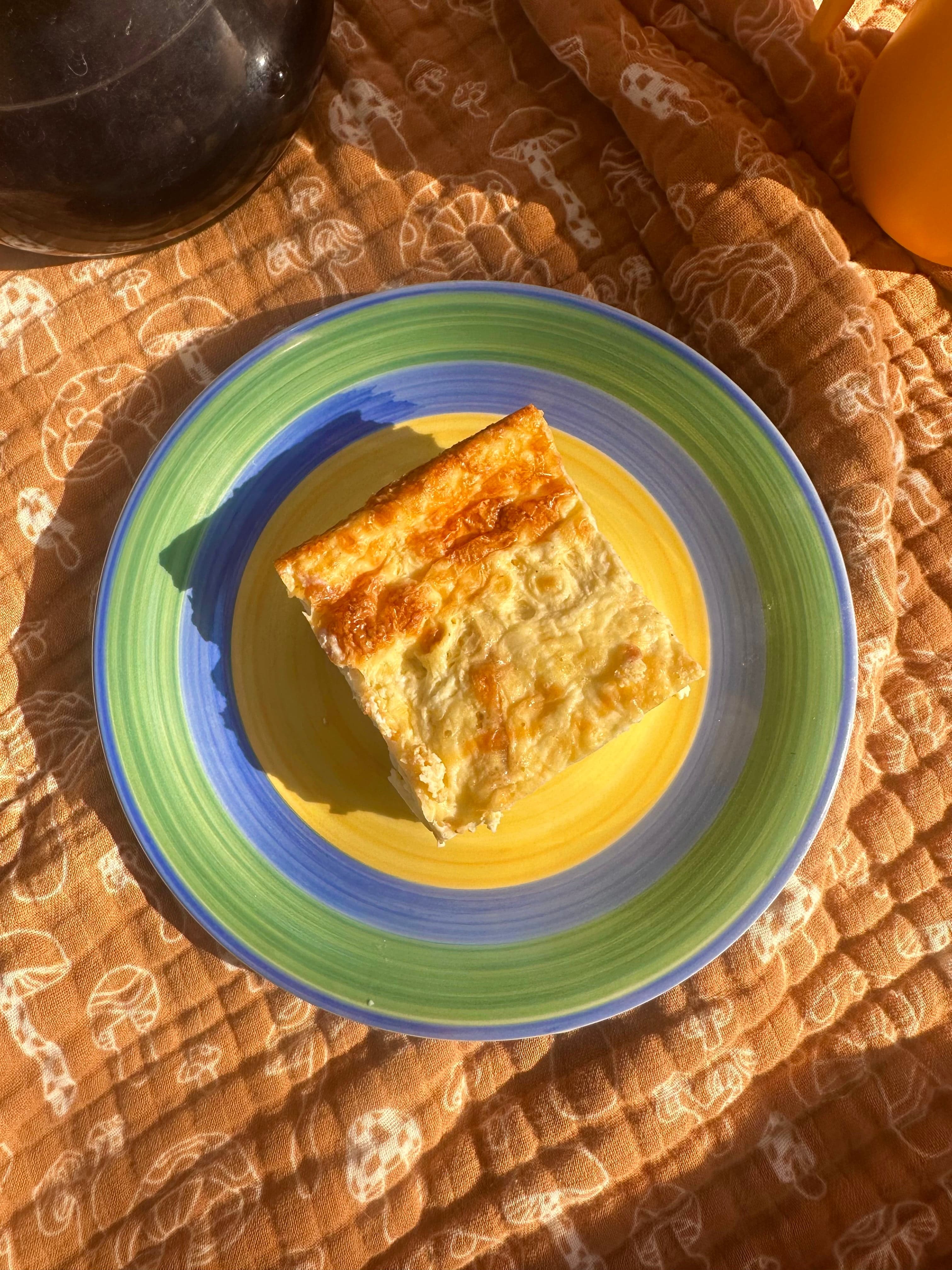
Bacon & Egg Frittata
Inspired by the classic French quiche lorraine, this frittata combines caramelized onions, local bacon, and sharp cheddar cheese in a custard of local eggs and organic cream. The eggs set into a creamy, custardy texture with crunch from the bacon, flavor from the onions and richness from the cheese.
Feeding someone who just had a baby?
We cook the meals and ship them frozen, so there is one less thing to figure out.