
Nutrition
Trimester Zero: The Season Before the Seed
The story of your baby's health begins before conception. Learn about Trimester Zero—the preconception period when nutrition, gut health, and stress management lay the foundation for pregnancy and postpartum.
- Your baby's health story starts long before a positive test — with your nutrient reserves, your gut and your nervous system.
- Traditional cultures fed couples specific nutrient-dense foods for six months to a year before conception. It was a community practice, not a supplement plan.
- Pregnancy is a large withdrawal from a nutrient account. Postpartum depletion is often a debt that was building long before conception.
- Preconception stress matters too, and the research suggests it can matter as much as stress during the pregnancy itself.
- This isn't a checklist to perfect. If you're already pregnant or already postpartum, none of it is a verdict.
Hi, and thank you for being here.
Today I want to talk about something that changed the way I think about my work nourishing others with Mothership. Something that honestly, looking back, changed the way I think about my own journey into motherhood.
It's called Trimester Zero.
Our society treats pregnancy like it starts the moment you see those two lines. But the truth is, the story of your baby's health begins way before that. It begins with you. With your body, your gut health, your nervous system, your spirit... months (or even years) before conception.
And this isn't just me being woo woo about it (though I'm definitely a little woo about it... triple water sign, what can I say). The science backs this up in a big, big way.
What the grandmothers already knew
In the 1930s, a dentist named Weston A. Price spent a decade traveling to remote cultures around the world... Swiss Alpine villages, Polynesian islands, Aboriginal Australia, the Outer Hebrides (*3). He was studying what made these communities so remarkably healthy. And what he found was stunning: virtually no tooth decay, incredible bone structure, robust immunity, easy births (*3).
But here's the thing that stopped me in my tracks when I first read it. Across all of these cultures, separated by thousands of miles and completely different food systems, the same practice showed up again and again: couples preparing for conception ate differently. They consumed special nutrient-dense foods, often for six months to a full year before they were considered ready to create life (*3, *4). These weren't optional supplements. It was a sacred practice. This was the community saying, we're going to build you up so you can build a life.
Your body is a bank account (and pregnancy is a massive withdrawal)
I love the way Lily Nichols puts this. Think of your body as a bank account. Pregnancy? That's a period of enormous withdrawals from your nutrient reserves (*1). You are building a skeletal system. A brain. A circulatory system. Eyeballs (eyeballs!!). If you walk into that project with a depleted account, something has to give... and it's usually you.
Nichols is a registered dietitian whose work on prenatal nutrition is backed by over 930 citations (*1). And what she found is that there's a massive gap between what conventional prenatal guidelines recommend, and what the science actually shows is optimal. The standard advice... take a multivitamin, avoid sushi, eat what you can keep down... is well-meaning, but honestly? It's also wildly insufficient. There is roughly a 17-year lag between when nutrition research gets published and when it makes it into clinical practice (*1). Seventeen years!
So what does the research actually point to?
Nutrient density. Real food. And starting way before conception.
Dr. Price found that isolated populations consuming traditional diets took in at least four times the minerals and TEN TIMES the fat-soluble vitamins compared to modernized counterparts (*3, *4). The fat-soluble vitamins A, D, E, and K2 are the ones your body needs to build bones, develop a baby's brain, regulate immunity, and lay down the architecture of every organ system. They're also the ones modern nutrition has spent decades telling us to avoid. Low-fat everything. Margarine instead of butter. Skim milk as a health food. (Don't get me started.)
Here's what those traditional cultures actually fed their mothers-to-be: liver and organ meats. Fish roe. Shellfish. Pastured egg yolks. Grass-fed butter. Bone marrow. Fermented foods. Bone broth (*3, *4).
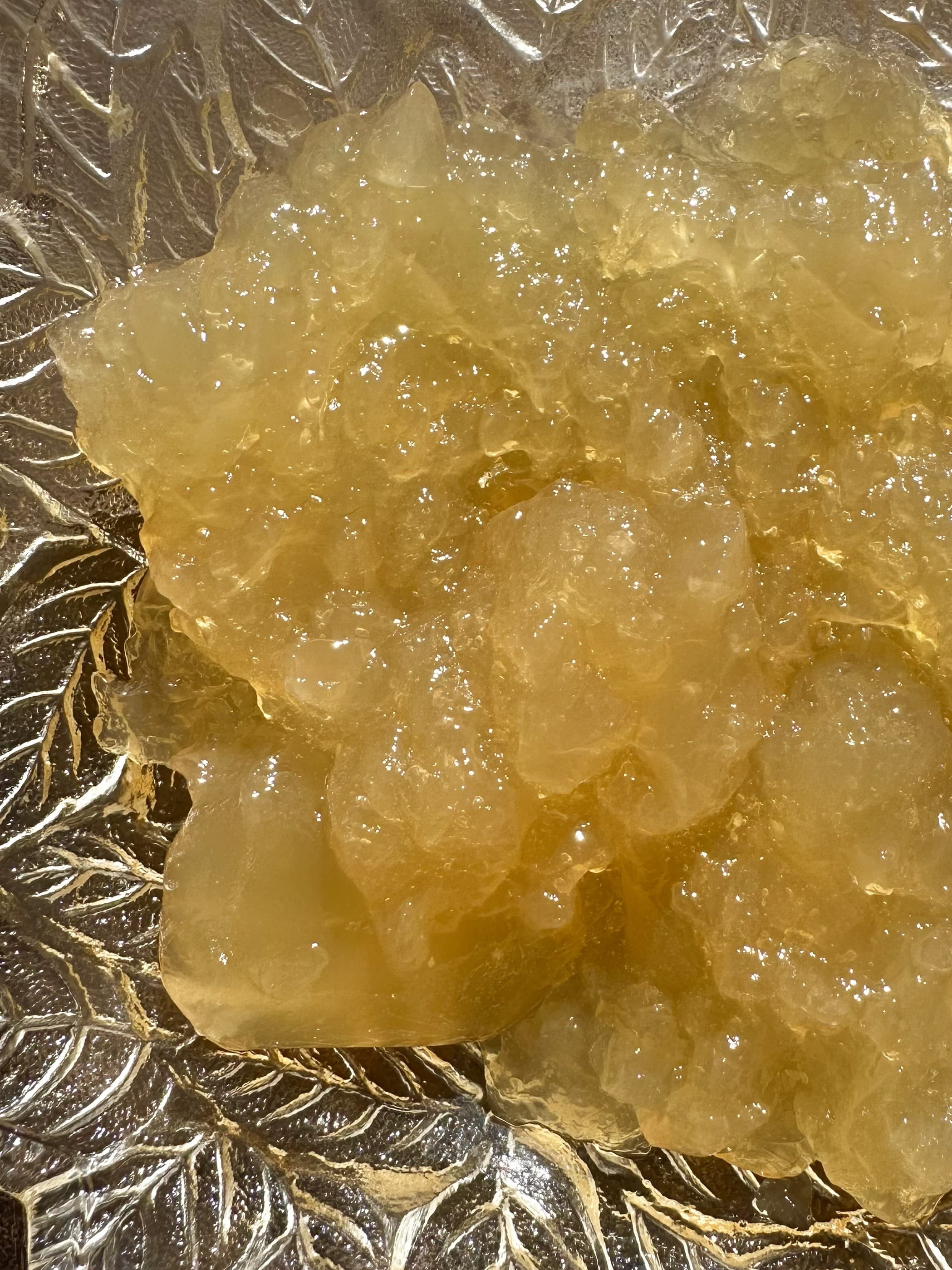
If your first reaction is ew, liver... I get it. Mine was too. But as someone who decided to use her degree in neuroscience to start a catering business, I can tell you: the nutrient density of liver is almost absurdly unmatched. Grass-fed bones matter because animals raised on pasture concentrate fat-soluble vitamins (A, D, K2) and omega-3s in their bones and marrow. This is why every Mothership soup and stew starts with bone broth that simmers for 48 hours. Not because it's trendy. Because it matters.
Nichols and her co-author Lisa Hendrickson-Jack lay it out in Real Food for Fertility: to support optimal egg and sperm quality, a healthy cycle, proper endometrial development, and a functional placenta, you need to be nutrient replete BEFORE sperm meets egg. Not just during (*2).
Now, if you've already given birth, or if you're already pregnant, I'm not saying this to spark fear, or to imply that something might be wrong if you didn't stack yourself up with these nutrient-dense foods before conceiving. (Personally, I didn't even find out I was pregnant with my first-born until I was already eight weeks along.) What I'm getting at is that what you feed yourself before you get pregnant can make a big difference, and if you can stack those odds in your favor, all the better.
The key nutrients to focus on:
Folate (not folic acid... the synthetic version is processed differently by your body) from leafy greens, liver, lentils. Neural tube formation happens in the first 28 days of pregnancy, often before you even know you are pregnant (*1, *2).
Choline, which most prenatal vitamins don't even include in meaningful amounts. Egg yolks, liver, and fish are your best sources. It's critical for brain development and placental function, and many women are profoundly deficient (*1, *2).
Iron and zinc from red meat and shellfish (*1).
Omega-3 DHA from fatty fish, fish roe, and pastured animal fats... essential for the fetal brain, which is roughly 60% fat by dry weight (*1, *2).
Vitamin A (retinol, the real stuff) from liver, cod liver oil, and pastured dairy (*1, *4).
And vitamin D, which many of us are deficient in and which influences everything from immune function to mood to placental health, and very significantly, the baby's future dental health (*1, *3).
I'm not saying you need to eat liver every day. But a good chicken liver pâté on a thick slice of sourdough with a pinch of flaky salt? That's not punishment, mama. That's a revelation.
Your gut is your baby's first home
OK, here's where it gets wild.
Your gut microbiome—that ecosystem of bacteria living in your intestines—isn't just digesting your lunch. It's shaping your future baby's immune system, metabolism, brain development, and lifelong health (*9, *10). And the state of your microbiome before AND during pregnancy is increasingly understood to be one of the strongest predictors of outcomes for both mother and child (*9).
Recent research published in Microbiome identifies the gut as a mechanistic link between your environment and your reproductive health (*9). Gut microbial imbalances (what researchers call dysbiosis) are associated with infertility, poor responses to fertility treatments, recurrent implantation failure, and adverse pregnancy outcomes (*9). Animal studies have shown that gut bacteria directly influence the quantity and quality of your eggs (*9).
And here's the clincher: your gut bacteria are your baby's first microbial inheritance. The maternal microbiome, particularly from the gut, provides the largest contribution of colonizing microorganisms to the newborn (*10). You are literally seeding your baby's immune and metabolic future with the bacteria you cultivate before and during pregnancy.
A study of over 5,000 pregnant women found specific microbial signatures in early pregnancy that could predict preterm birth risk (*10). Basically, the gut can telegraph problems months before they show up clinically.
So what feeds a healthy microbiome?
Exactly the foods those traditional cultures already knew to prioritize. Fermented foods (sauerkraut, yogurt, kefir, miso, sourdough). Fiber-rich vegetables. Bone broth rich in gelatin and collagen. Whole foods free from the industrial processing that disrupts microbial diversity (*9, *10).
The standard Western diet—heavy on processed food, refined sugar, and industrial seed oils—consistently promotes the kind of dysbiosis linked to complications (*9).
I grew up picking broccoli and blueberries from the garden in my backyard, sneaking pears straight from the tree, and risking scratches and bee stings just to get that one perfect raspberry from the bush. I have vivid memories of sitting down at the dinner table with my family and thinking, this matters. Now I understand the science behind why it did. We were feeding more than just our bodies. We were feeding the invisible ecosystem that would shape everything downstream.
Your stress is not just in your head
This is where my neuroscience brain gets really activated (stay with me, this matters so much).
Epigenetics is the study of how your environment changes the way your genes are expressed. Not by altering the DNA itself, but by adding chemical tags that turn genes up or down—like dimmer switches on a circuit board. And the preconception and prenatal periods are among the most epigenetically sensitive windows in human development (*7, *8).
A 2024 review in Clinical Epigenetics found that prenatal stress can leave lasting marks on the developing fetus, particularly on genes involved in the stress-response system (*7). Maternal stress during pregnancy has been linked to changes in how the baby's cortisol system develops—changes that can predispose a child to anxiety, mood disorders, and heightened stress reactivity throughout their life (*7, *8).
But here is what really got me: it's not just prenatal stress that matters. A longitudinal study tracking women from childhood found that PREconception stress—stress experienced during childhood and adolescence, long before pregnancy—was independently associated with birth outcomes (*5). In some analyses, preconception stress explained more variability in birth outcome disparities than stress during the pregnancy itself (*5).
Let that sink in. Your stress history walks into that pregnancy with you.
A 2025 study from the University of Barcelona found that maternal stress leaves epigenetic imprints on placental genes associated with cortisol regulation, affecting baby's development from the very earliest stages (*6). And here is something fascinating: maternal stress induces different epigenetic changes in male versus female placentas, which may help explain why prenatal stress is associated with higher rates of ADHD and autism in boys (*6, *8). The placenta isn't a passive barrier. It's actively reading your stress signals and translating them into developmental instructions for your baby.
What does this mean for Trimester Zero?
It means that caring for your nervous system before pregnancy isn't a luxury. It isn't something you do after you have checked everything else off the list. It is, in the most literal neurobiological sense, laying the foundation for your baby's emotional regulation, cognitive development, and mental health (*5, *7).
The part nobody talks about: community and spirit
I believe we're all placed here because there's meaning and purpose behind weaving ourselves into each other's fabrics of space and time. And nowhere is that more true than in the journey to becoming a mother.
Traditional cultures didn't just feed women differently before conception. They HELD them differently. There were rites, rituals, and community practices designed to surround the woman and her partner with support and intentionality (*3, *4). This wasn't just tradition for tradition's sake. This was social infrastructure for the most physiologically demanding experience in human life.
And modern research is catching up. The NIH-funded Preconception Stress and Resiliency Pathways model found that resilience factors—social support, community connection, sense of purpose—don't just buffer against stress. They actively shape the biological pathways that influence pregnancy outcomes and family health across generations (*5). Studies have found that perinatal mental health interventions could improve child outcomes, possibly by normalizing stress hormones and reducing epigenetic disruption (*7, *8).
Which means therapy, community, meditation, time in nature, creative work, honest conversations with your partner, asking for help, being held by the people who love you... these aren't soft add-ons. They are upstream interventions with downstream biological consequences.
Here's what I'd offer instead of a checklist:
Where is your nervous system most of the time? Activated? Exhausted? Numb?
What stories about motherhood are you carrying that aren't yours?
What kind of support do you actually need... not the kind you think you should want?
Who in your life makes you feel held? Can you let them?
These questions don't have right answers. But the asking itself is a form of preparation that no prenatal vitamin can replace.
Postpartum starts in Trimester Zero
Here's the through-line that ties everything I do at Mothership together.
The depth of your nutrient reserves at conception determines not just the health of your pregnancy, but the speed and completeness of your postpartum recovery (*1, *2). Every ounce of iron, every microgram of choline, every colony of beneficial bacteria you build up before pregnancy is a resource you draw on when you're postpartum, sleep-deprived, healing from birth, and producing breast milk (which is, calorie for calorie, one of the most metabolically expensive substances the human body creates).
Mothership was born from my own experience nourishing my body during the fourth trimester. There is a big gap in the space that takes care of mothers in that precious window right after giving birth. Focus is on the baby, and even if family is around to help, there's so much energy spent just organizing the logistics that actual nourishment falls through the cracks.
Women in traditional cultures received the same sacred nutrient-dense foods postpartum that they ate preconception—organ meats, bone broth, fermented foods, animal fats—because they understood what we're still slowly re-learning: the cycle of nourishment is continuous (*3, *4). It doesn't start at the positive pregnancy test and end at delivery. It starts with the intention to create life and extends well into the months and years that follow.
This is why the pressure to "bounce back" after birth makes me so frustrated. You cannot bounce back to a bank account you never filled (*1). Postpartum depletion isn't a failure. For many women, it is a nutrient debt that was building long before they ever conceived.
So what do you actually do?
Whether you're in trimester zero or juggling three under two, taking care of your family starts with taking care of yourself. I'm not going to give you a 47-point checklist. That's the opposite of what this should feel like. But here is what the science, the traditions, and my own journey feeding mothers has shown me:
Eat real food, and eat a lot of it. Prioritize nutrient density over calorie counting (*1, *2). Egg yolks, liver (or liver capsules if you can't hang with the taste), bone broth, fatty fish, fermented foods, full-fat dairy if you tolerate it. With a squeeze of lemon and pinch of sea salt, a mug of good bone broth is the perfect health tonic. And most importantly... it's delicious!!
Feed your gut. Fermented foods daily... even a few forkfuls of sauerkraut, a splash of kefir, a good sourdough. Fiber from vegetables. Cut the processed food where you can, not out of perfection but because your microbiome literally cannot thrive on it (*9, *10).
Care for your stress... honestly. Not just the surface-level stuff (though baths are great too). Real, structural support. Therapy if you have the time, the spaciousness, the budget (not just if you think you need it). Hard conversations if you've been avoiding them. Boundaries. Community (*5, *7). This is the hardest piece and the most important one.
Move in ways that feel good. Walk. Swim. Stretch. Dance in your kitchen. Movement regulates your nervous system, supports your microbiome, and helps metabolize stress hormones. Do it because it feels right.
Start a good prenatal early, but do not lean on it. One with methylfolate (not folic acid), choline, and adequate vitamin D (*1, *2). It is a safety net, not a strategy. The real nutrition comes from your plate.
Rest. I mean it. Sleep is when your body repairs, your hormones regulate, your immune system recalibrates. In a culture that glorifies exhaustion, choosing rest is one of the most powerful things you can do.
The real point
Trimester Zero is not about doing everything perfectly. It's about recognizing that nourishment—real, deep, whole-person nourishment of body, mind, and spirit—isn't a project to be optimized. It's a way of being.
Those cultures Dr. Price visited didn't have supplement protocols or meal tracking apps (*3). They had bone broth simmering on the fire and a grandmother who knew which foods to save for the young woman about to start her family. They had community. They had rest. They had the kind of wisdom that comes from paying attention to what works, generation after generation, and passing it forward.
We don't have to romanticize the past to learn from it. And we don't have to reject modern science to honor the traditions it keeps validating. The best preconception care lives at the intersection of both.
Fueling your body with locally sourced, nutrient-dense food lays a fantastic foundation for better sleep, energy, mood, and really everything else that goes on during the day (and there is usually a lot!!). Your baby's health starts with yours. Not at the positive test. Not at the first ultrasound. Now.
Welcome to Trimester Zero.
-Monika
References and Further Reading
Books
*1. Nichols, L. (2018). Real Food for Pregnancy: The Science and Wisdom of Optimal Prenatal Nutrition. ISBN: 978-0986295041. lilynicholsrdn.com/real-food-for-pregnancy
*2. Nichols, L. & Hendrickson-Jack, L. (2024). Real Food for Fertility: Prepare Your Body for Pregnancy with Preconception Nutrition and Fertility Awareness. Fertility Food Publishing. ISBN: 979-8989595518. amazon.com/Real-Food-Fertility
*3. Price, W.A. (1939). Nutrition and Physical Degeneration. Price-Pottenger Nutrition Foundation. Full text available at Project Gutenberg Australia
*4. Weston A. Price Foundation. "Characteristics of Traditional Diets." westonaprice.org/health-topics/abcs-of-nutrition/characteristics-of-traditional-diets
Research Papers
*5. Hipwell, A.E., Fu, H., Tung, I., Stiller, A. & Keenan, K. (2022). Preconception stress exposure from childhood to adolescence and birth outcomes: The impact of stress type, severity and consistency. Frontiers in Reproductive Health, 4:1007788. Full text at Frontiers
*6. Castro-Quintas, A., Palma-Gudiel, H., Eixarch, E., et al. (2025). Placental epigenetic signatures of maternal distress in glucocorticoid-related genes and newborn outcomes: A study of Spanish primiparous women. European Neuropsychopharmacology, 90:36–47. PubMed
*7. Dieckmann, L. & Czamara, D. (2024). Epigenetics of prenatal stress in humans: The current research landscape. Clinical Epigenetics, 16:20. PMC full text
*8. Álvarez-Mejía, D., Rodas, J.A. & Leon-Rojas, J.E. (2025). From Womb to Mind: Prenatal Epigenetic Influences on Mental Health Disorders. International Journal of Molecular Sciences, 26(13):6096. Full text at MDPI
*9. Munyoki, S.K., Vukmer, N. & Jašarević, E. (2025). From gut to gamete: How the microbiome influences fertility and preconception health. Microbiome, 13:195. PMC full text
*10. Dunlop, A.L., Mulle, J.G., Ferranti, E.P., Edwards, S., Dunn, A.B. & Corwin, E.J. (2015). The Maternal Microbiome and Pregnancy Outcomes that Impact Infant Health: A Review. Advances in Neonatal Care, 15(6):377–385. PMC full text
Topics
Share this to your Story
We'll make you an image that's already sized for it.
From the kitchen
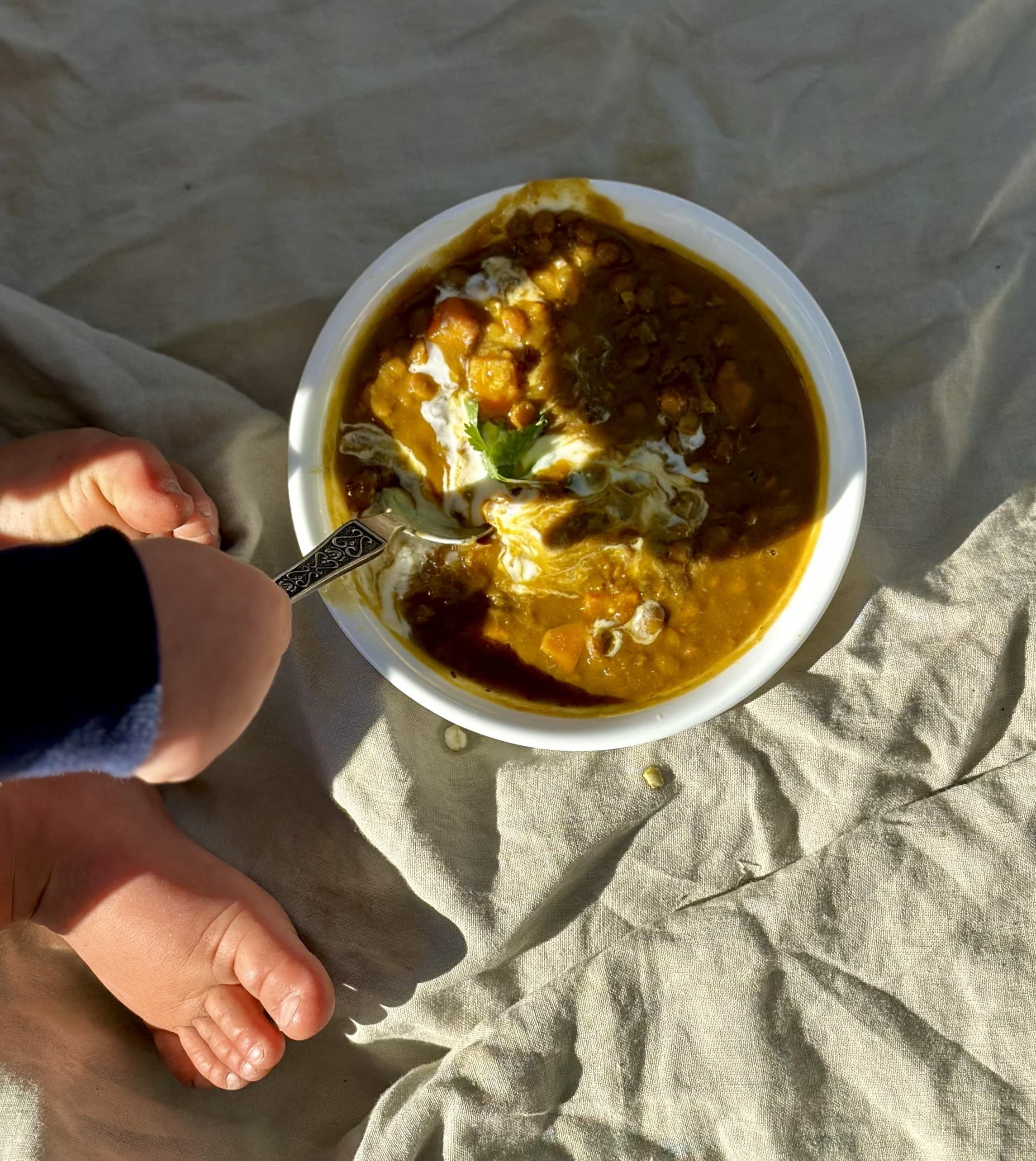
Turmeric & Ginger Dal
Organic red lentils (the kind that cook down to a creamy consistency) are simmered in our 48-hour bone broth and layered with caramelized onions, fresh ginger, fresh turmeric, garlic and our from-scratch garam masala.
Feeding someone who just had a baby?
We cook the meals and ship them frozen, so there is one less thing to figure out.