
Practical Guides
Preparing for Postpartum: What to Do Before Baby Arrives
Postpartum preparation isn't about buying things. It's about removing friction from future-you's life — starting with whether there's food.
- Postpartum prep isn't shopping. It's removing friction from the life of the person you'll be at 3 a.m. in six weeks.
- The order that matters: food, rest, cleanliness, support, information. Everything else is optional.
- Food is the one you can actually control. Two weeks of freezer meals minimum, ideally more.
- Have the support conversations before you need them, including the boundaries. Your job is to recover, not to host.
- You can't fully prepare for postpartum. You can only make it easier to get through.

Here's a truth that took me too long to learn: postpartum preparation isn't about buying things. It's about removing friction from future-you's life.
When you're holding a newborn at three in the morning, tired in a way you didn't know was available to humans, you won't be thinking about the nursery. You'll be thinking: is there food? Can I sit down? Where are the clean clothes?
So that's what this is about. Not the Pinterest version of postpartum prep. The real one.
First, a mindset shift
Before the practical stuff, let me name something. Preparing for postpartum means planning for a season of being vulnerable, and that's uncomfortable if you're used to being capable and in control.
You might be tempted to think, I'll figure it out when I get there. And you will. But there's a real difference between figuring it out from a place of stability and scrambling from a place of depletion.
The point of preparing isn't to control the uncontrollable. It's to give yourself margin — room to be tired, room to learn, room to not have it together.
What actually matters, in order
When I think about the early weeks, I think in terms of basics:
Food — can you eat without effort?
Rest — can you sleep when the chance appears?
Cleanliness — are the basics covered?
Support — do you have people to lean on?
Information — do you know where to turn when a question comes up?
Everything else — the nursery organization, the perfectly curated hospital bag, the coming-home outfit — is optional. So let's spend our time on the five.
Food: the most important prep there is
I'm biased and I'll say it anyway: food is the single most useful thing you can prepare.
Here's why. Unlike sleep, which depends entirely on a baby who has opinions, food is something you can actually decide about in advance. A freezer full of real meals means you'll eat well even when everything else is chaos.
Stock the freezer. Two weeks minimum, more if you can. Nourishing, easy to heat, no assembly, and actually satisfying, because you'll be hungrier than you expect.
Set up a snack station. Think one-handed, while nursing: nuts and dried fruit, cheese and crackers, energy balls, cut fruit, decent granola bars.
Sort out water. Get a large bottle you actually like and put it wherever you'll end up nursing most.
Accept meal help. When people ask what you need, say food. Set up a meal train or just tell a few close friends what you like.
For more on what your body is asking for in this stretch, have a look at What Your Body Actually Needs Postpartum.
Rest: removing obstacles
You can't control when the baby sleeps. You can remove the things standing between you and rest when the chance shows up.
Sort the bedroom. Blackout curtains, a temperature you like, phone charger within reach.
Think through the logistics. Where will the baby sleep? Is the bassinet near the bed? Is the path clear for the middle of the night?
Talk about nights now. If you have a partner, divide the nights before you're both wrecked. Even something as blunt as "you take 10 to 2, I take 2 to 6" helps enormously.
Lower the bar. You probably won't sleep every time the baby sleeps. But can you lie down? Close your eyes for ten minutes? That counts.
Cleanliness: make it effortless
When you're this tired, basic hygiene can feel like a project. Make it as easy as you can.
Stock up: pads in several absorbencies and more than you think, a peri bottle (the hospital will likely give you one), witch hazel, comfortable underwear you won't mind staining, nipple cream if you're nursing.
Laundry. Wash the baby clothes ahead. Put a basket right by the changing area and plan on frequent small loads rather than heroic ones.
Shower things. Good shampoo, easy body wash, a robe you love. Showers become events. Make them count.
Paper products. Paper plates and napkins for the early weeks. The dishes can wait, and so can your standards about the dishes.
Support: build the village before you need it
This is the one most people skip and most people regret. Postpartum is not the season to be independent.
Work out who your people are. Who do you call when you're struggling? Who can you text at 2 a.m. without being judged? Who will bring food and not expect to be entertained?
Have the conversations now. Tell people what kind of support you'll want. Some mothers want visitors; some want the house quiet. Some want hands in the sink; some want the bag left on the step. Nobody can guess.
Set the boundaries early. If there are people who take more energy than they give, it's fine to limit visits. Your job is to recover, not to host.
Look into professional support. A postpartum doula, a lactation consultant, a therapist on standby. Research it now so you're not doing it at midnight in week three. You can find a birthworker near you whenever you're ready.
Information: know where to turn
Postpartum raises questions you didn't know you'd have. Having the answers to hand takes the panic out of it.
Save the contacts: pediatrician, OB or midwife, lactation consultant, and Postpartum Support International (1-800-944-4773).
Bookmark a couple of resources you trust, plus your hospital's nurse line.
Know when to call. Review the warning signs — fever, heavy bleeding, signs of infection, mood changes that worry you or the people around you — and call without hesitating. That's what the number is for.
What not to stress about
In the spirit of keeping it real:
The nursery. The baby will likely be sleeping in your room for months.
The perfect hospital bag. A few outfits, toiletries and snacks.
Baby gear reviews. Most babies are indifferent to whether the bouncer is top-rated.
Birth plan details. Have preferences; hold them loosely.
"Bouncing back." Please don't. Your only job is to recover.
The checklist
Food: freezer stocked with two-plus weeks of meals · snack station set up · big water bottle ready · meal help arranged
Rest: sleep space sorted · night shifts agreed · baby sleep setup ready
Cleanliness: postpartum supplies stocked · laundry system in place · paper products in the cupboard
Support: core people identified · preferences communicated · professional support researched
Information: contacts saved · resources bookmarked · warning signs reviewed
The real secret
Here's what I wish someone had told me. You cannot fully prepare for postpartum. You can only reduce friction.
You're going to feel things you didn't expect. You're going to have hard days. You're going to wonder whether you're doing it wrong. And you'll come through — not because you prepared perfectly, but because people are more resilient than they think, and because support makes almost everything survivable.
So yes. Stock the freezer. Set up the snack station. Have the conversations. And also give yourself permission to not have it all figured out.
"There is no way to be a perfect mother, and a million ways to be a good one."
— Jill Churchill
Topics
Share this to your Story
We'll make you an image that's already sized for it.
From the kitchen
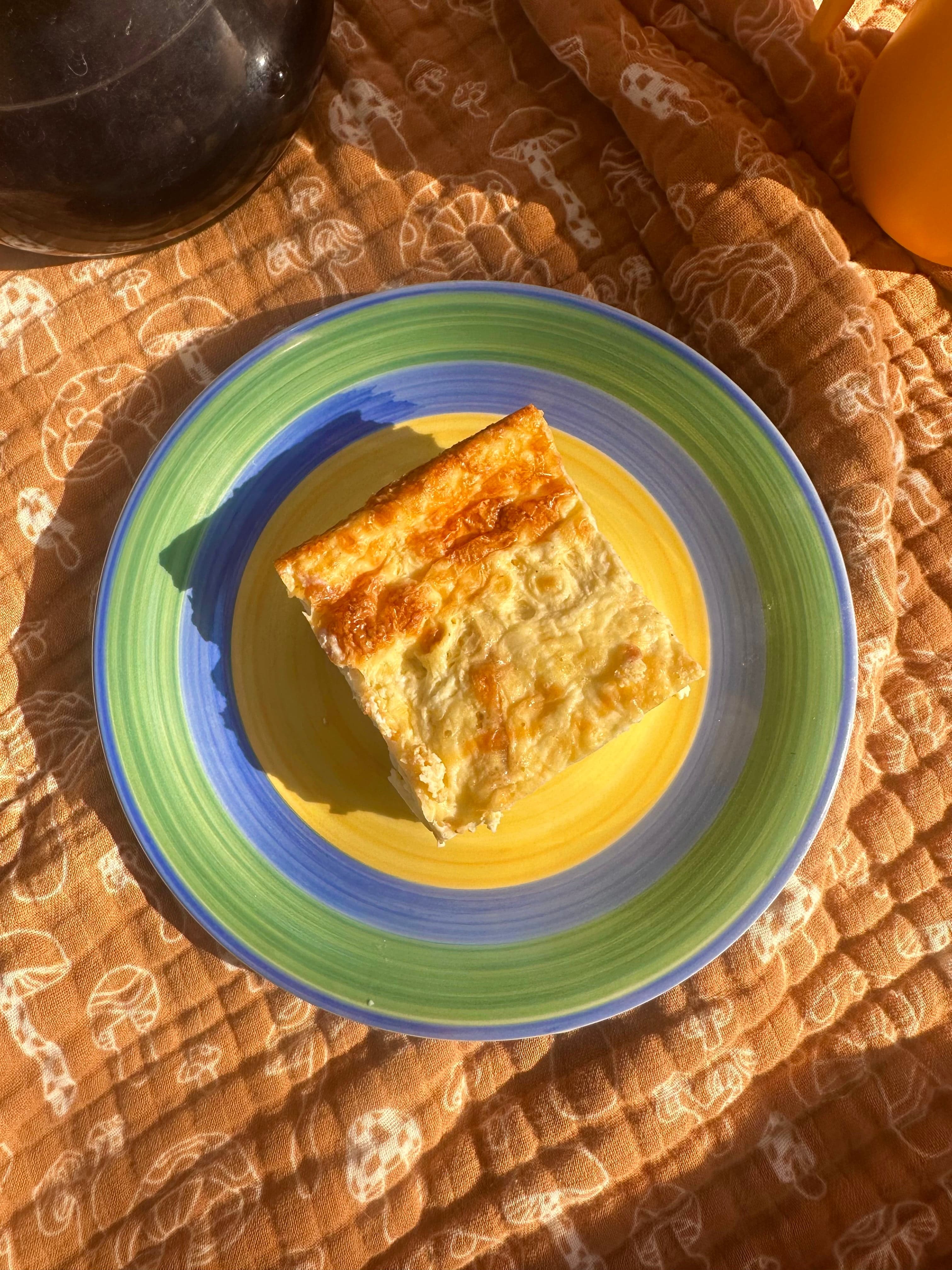
Bacon & Egg Frittata
Inspired by the classic French quiche lorraine, this frittata combines caramelized onions, local bacon, and sharp cheddar cheese in a custard of local eggs and organic cream. The eggs set into a creamy, custardy texture with crunch from the bacon, flavor from the onions and richness from the cheese.
Feeding someone who just had a baby?
We cook the meals and ship them frozen, so there is one less thing to figure out.