
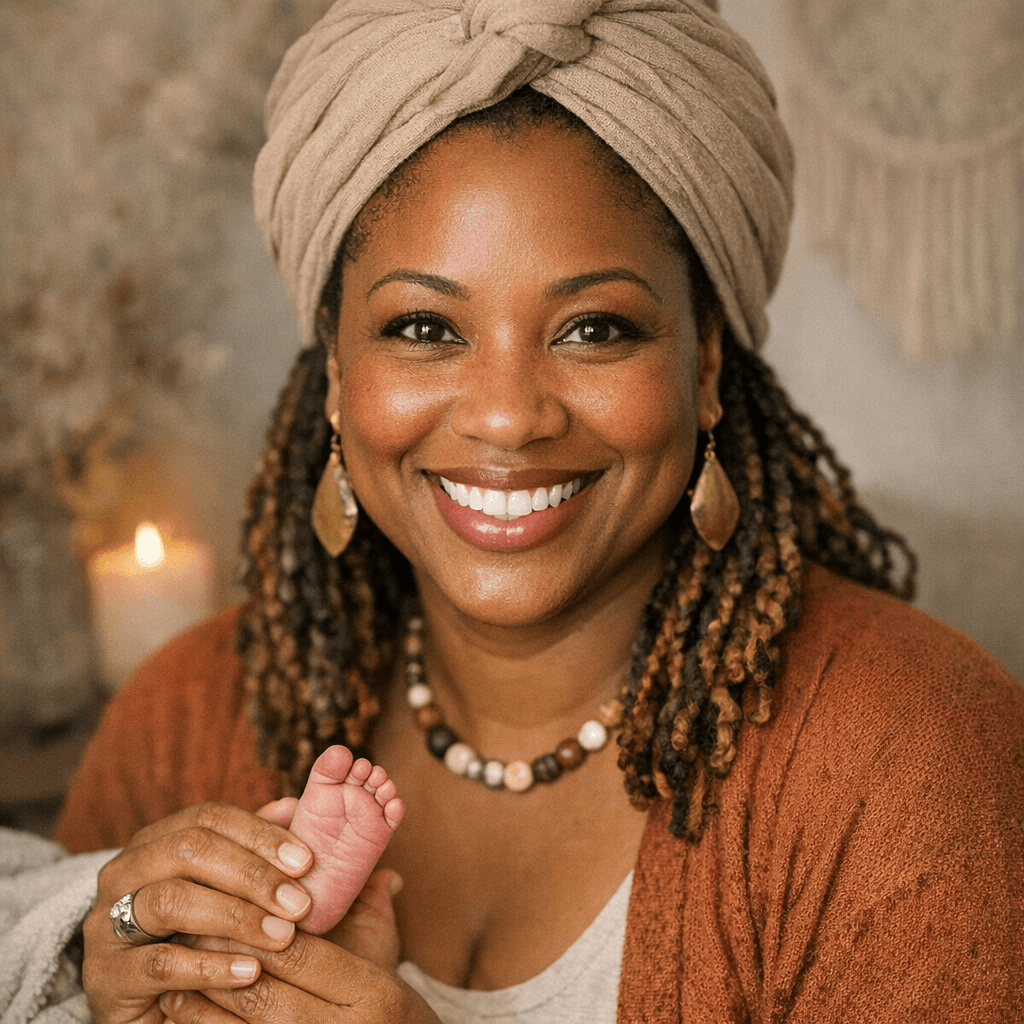
What It Means to Be a Birth Keeper
By Sarah Mendoza, CPM, LMJanuary 15, 20266 min read
I get asked this question a lot—usually with a slightly puzzled expression. "So… you're a midwife? A doula? What exactly is a birth keeper?"
The short answer is: yes, I'm a licensed midwife. But "birth keeper" describes something a little different. It's less about credentials and more about philosophy. It's about how I show up.
And honestly, I think it's worth talking about—not because everyone needs to choose a birth keeper, but because the ideas behind it might change how you think about birth itself.
You are allowed to ask questions about how your birth will be attended.
You are allowed to want fewer interruptions.
You are allowed to trust your body—even if you also want the safety net of a hospital.
You are allowed to choose providers who believe in you.
Whether you're planning a home birth, a birth center birth, or a hospital birth with all the interventions available, you can still ask: Who will be keeping this space for me? How will they show up? Do they trust the process?
Those questions matter.
Sarah Mendoza is a Certified Professional Midwife and Licensed Midwife based in Morro Bay, California. She has attended nearly 300 births on the Central Coast over the past 12 years. View her profile.
Note: This is a sample article written for demonstration purposes. Sarah Mendoza is a fictional character created to illustrate Mothership's birthworker directory features.
The word itself
"Birth keeper" isn't a protected title. You won't find it on a license. It's a term that emerged from the home birth and traditional midwifery communities to describe a particular approach to supporting birth. At its core, a birth keeper is someone who keeps the birth space. Not manages it. Not directs it. Keeps it—the way you might keep a garden, or keep a fire burning, or keep watch over something sacred. It implies presence without interference. Witnessing without controlling. That doesn't mean passive. It means attentive in a different way.What birth keepers believe (mostly)
I can't speak for every birth keeper—we're not a monolith. But here are some ideas that tend to show up: Birth is a normal physiological process. Not a medical event waiting to go wrong. Not something that needs to be "managed" into safety. The body knows how to birth. Our job is to support that process, not override it. The birthing person is the authority. Not the provider. Not the protocol. Not the clock. The person giving birth is making decisions about their own body, and our role is to offer information, skill, and support—not direction. Less is often more. Fewer interventions, fewer interruptions, fewer strangers walking in and out. A quiet, protected space where the birthing person can go inward and do the work their body already knows how to do. Trust is foundational. Trust in physiology. Trust in the birthing person. Trust in the process. This doesn't mean ignoring complications—it means not treating every birth like a complication waiting to happen.How this looks in practice
When I attend a birth as a keeper of that space, my job looks something like this: I arrive quietly. I don't bustle. I don't take over. I observe—listening to heart tones, watching for signs of how labor is progressing, noticing changes in energy, breathing, sounds. I'm tracking a lot, but most of it happens in the background. I don't announce cervical dilation unless someone asks. I don't coach pushing. I don't tell anyone what to do with their body. I might offer a sip of water. Suggest a position change if things seem stuck. Apply counterpressure if it helps. Mostly, I'm just there—steady, calm, paying attention. When the baby comes, I don't rush. I don't suction unless it's needed. I don't cut the cord on a timer. I wait, and I watch, and I let the first moments unfold without urgency. And then I do the quiet work of making sure everyone is safe: checking for bleeding, watching the baby's color and breathing, supporting the first feed if that's the plan. Clinical skills, held lightly.What this is not
I want to be clear: birth keeping is not anti-medicine. It's not reckless. It's not ideology over safety. I'm a licensed midwife. I carry equipment. I know how to manage a hemorrhage, resuscitate a newborn, recognize when something is going wrong. I have transfer relationships with hospitals. I make clinical decisions every single birth. The difference is in the posture. I'm not looking for problems. I'm not treating birth as dangerous by default. I'm trusting the process while staying prepared for the exceptions. Some people hear "birth keeper" and imagine someone who would never intervene, who would let things go wrong out of principle. That's not what this is. The goal is appropriate intervention—not no intervention, not routine intervention. Just what's actually needed, when it's actually needed.Why this matters (even if you never hire a birth keeper)
You don't have to have a home birth to benefit from these ideas. You don't have to hire a midwife, or find a birth keeper, or do anything differently than you're already planning. But I think there's something valuable in just knowing that this approach exists. Knowing that birth can be held this way—with trust, with patience, with presence—even if your own birth looks completely different. Because here's what I've seen after 12 years and nearly 300 births: the way we think about birth shapes the way we experience it. If we believe birth is dangerous, we approach it with fear. If we believe our bodies are broken, we look for someone to fix us. If we believe we need to be managed, we hand over our authority. And none of that is wrong, exactly. Sometimes birth is scary. Sometimes bodies need help. Sometimes management is the right call. But sometimes—often, actually—birth just needs space. Space to unfold. Space to be witnessed. Space to be trusted. That's what a birth keeper tries to hold.Finding your own version
Not everyone wants a home birth. Not everyone wants a midwife. Not everyone resonates with the word "birth keeper" or the philosophy behind it. That's okay. What I hope is that you take from this a few simple ideas:A closing thought
I became a midwife because I saw too many people leave their births feeling like something had happened to them, rather than something they had done. I wanted to offer a different experience—one where the birthing person stays at the center, where their body is trusted, where the space is held with reverence. That's what birth keeping means to me. Not a credential. Not a technique. Just a way of being present to one of the most ordinary, extraordinary things a human body can do. If you're curious about working with a midwife or birth keeper, the Mothership Directory can help you find someone in your area. And if you have questions—about any of this—feel free to reach out. I'm always happy to talk. Cheers to you, wherever you are in this journey. — Sarah Mendoza, CPM, LMSarah Mendoza is a Certified Professional Midwife and Licensed Midwife based in Morro Bay, California. She has attended nearly 300 births on the Central Coast over the past 12 years. View her profile.
Note: This is a sample article written for demonstration purposes. Sarah Mendoza is a fictional character created to illustrate Mothership's birthworker directory features.
Topics
birth keepermidwifehome birthnatural birthbirth philosophyholistic birthphysiologic birthbirthworker
Find a birthworker near you
Connect with midwives, doulas, and birth keepers in your area.